
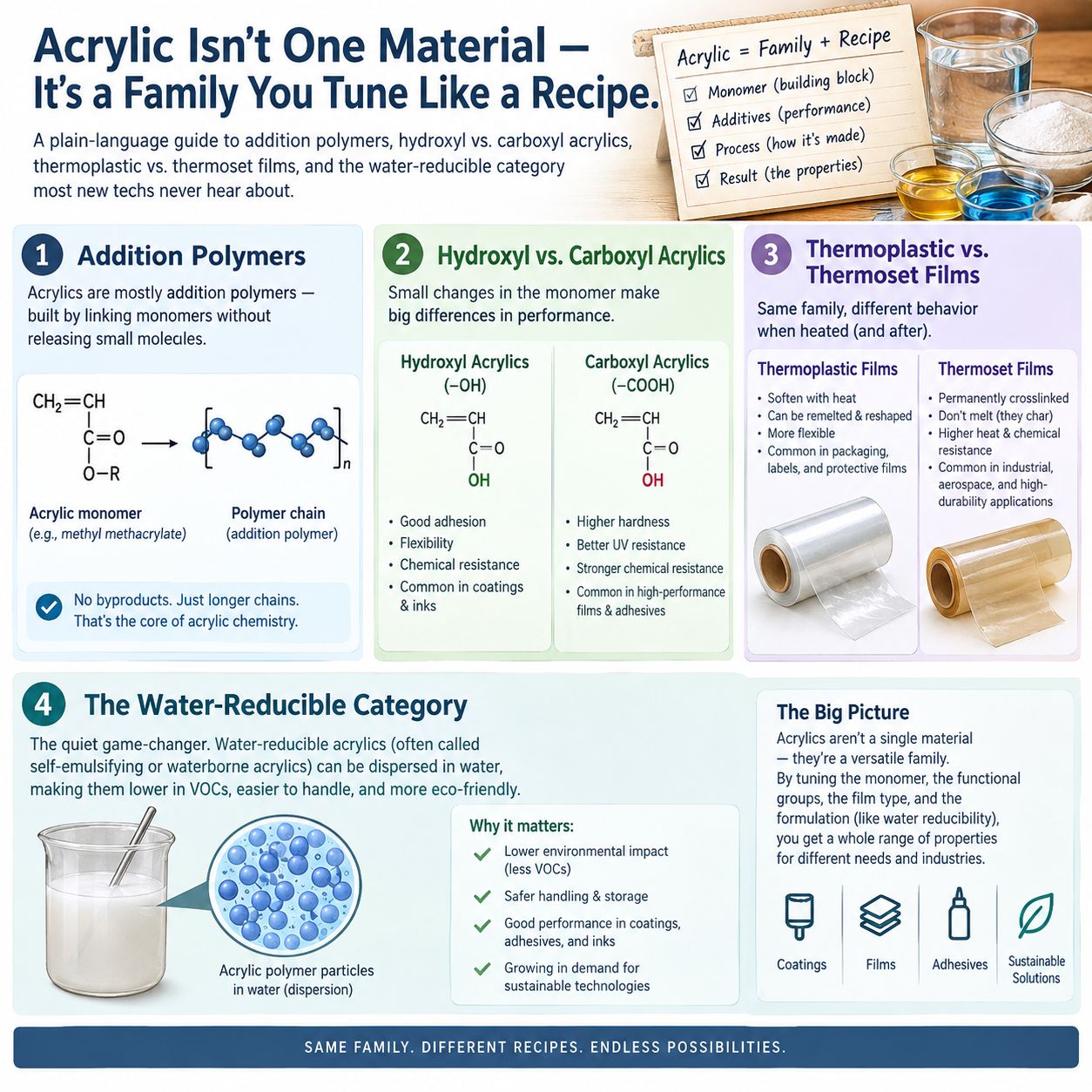
"Use an Acrylic" Is About as Useful as "Use an Egg"
Acrylic isn't one material, it's a family you tune like a recipe. A plain-language guide to addition polymers, hydroxyl vs. carboxyl acrylics, thermoplastic vs. thermoset films, and the water-reducible category most new techs never hear about.
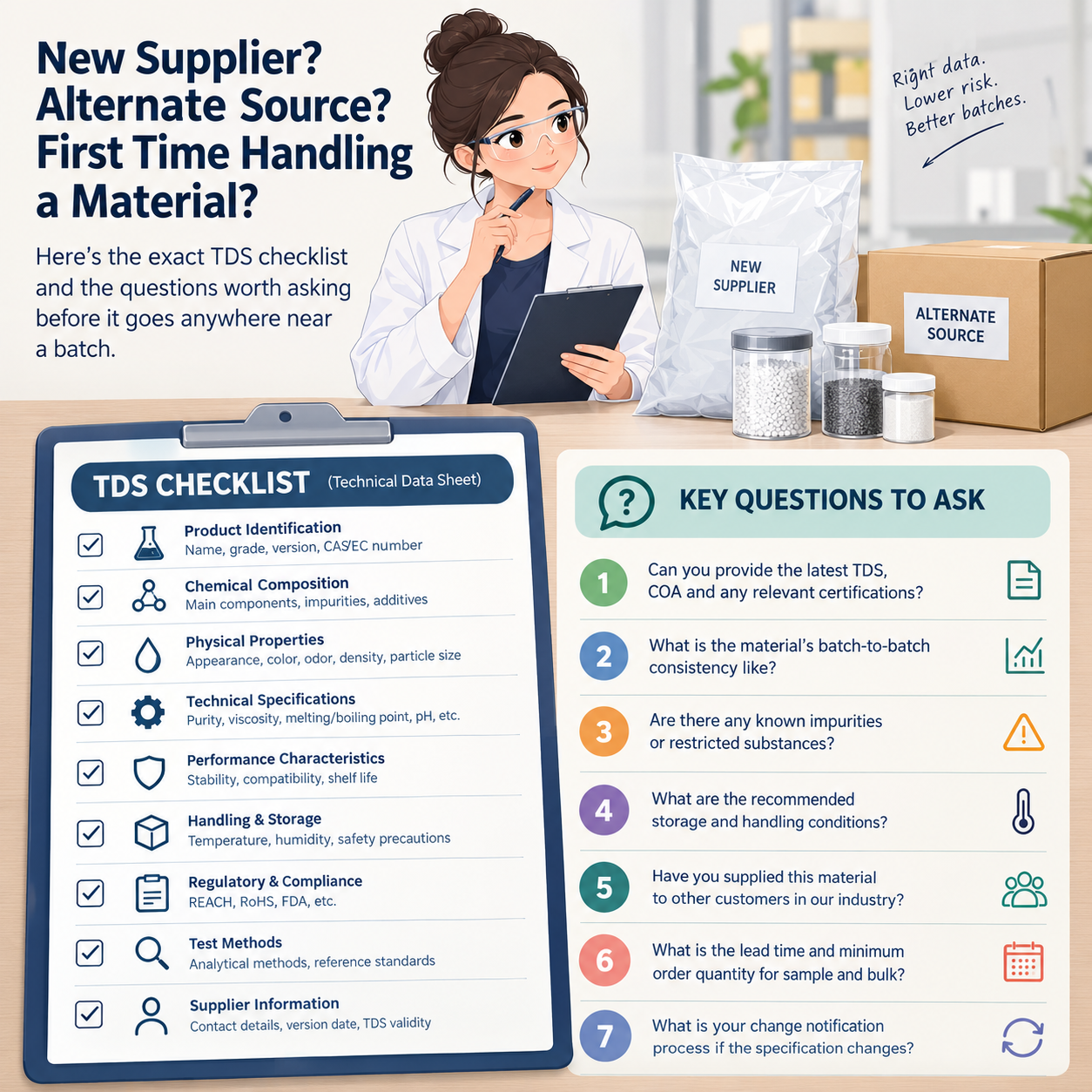
The Checklist to Run Every Time a New Raw Material Shows Up
New supplier, alternate source, first time handling a material — here's the exact TDS checklist and the questions worth asking before it goes anywhere near a batch.

Same Five Ingredients, Two Completely Different Coatings
An interior wall paint and an exterior wood stain don't share a single raw material — but they're built from the exact same five roles. Here's the framework in action, twice.
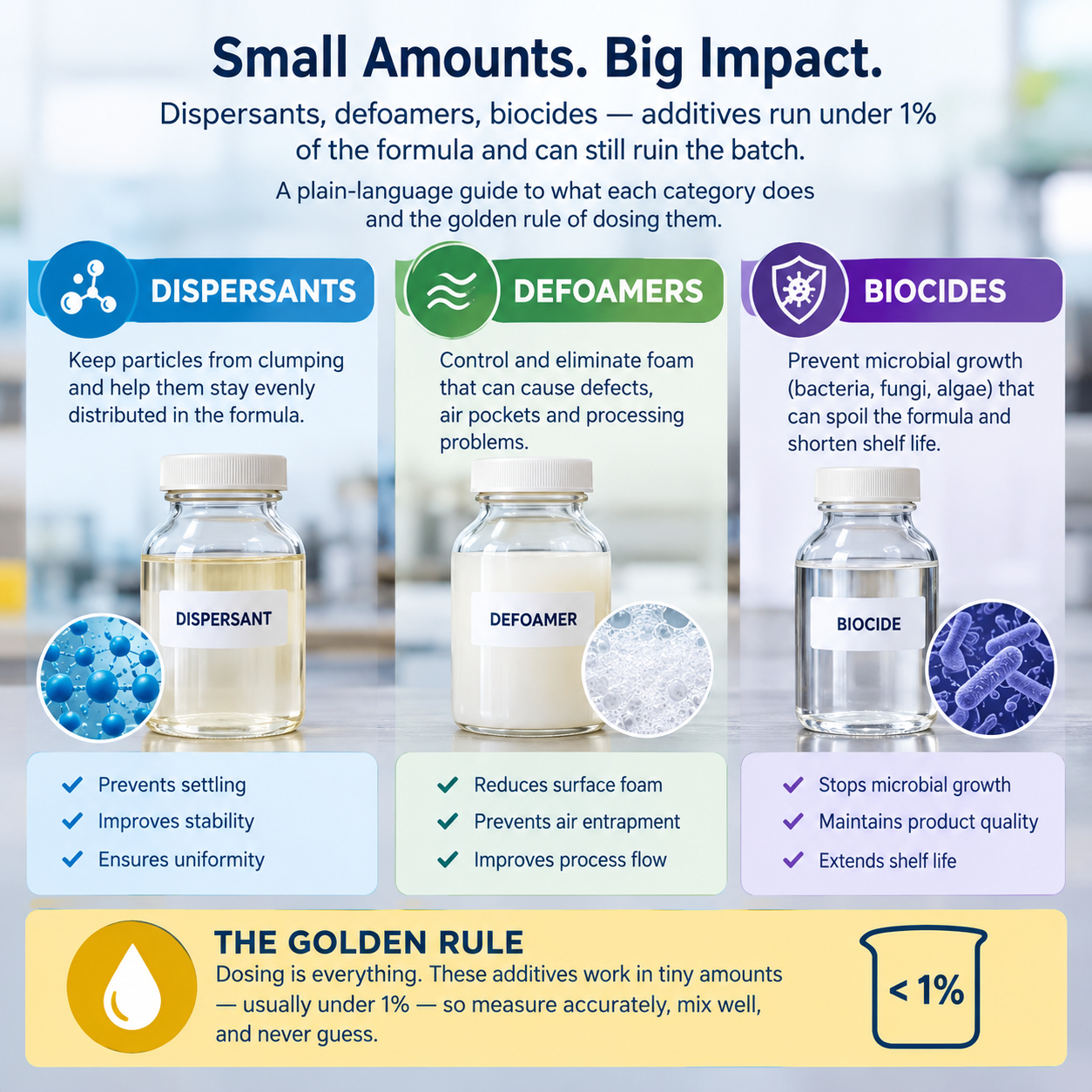
The Ghost Pepper of Your Formula: Why Additives Punch Above Their Weight
Dispersants, defoamers, biocides — additives run under 1% of the formula and can still ruin the batch. A plain-language guide to what each category does and the golden rule of dosing them.
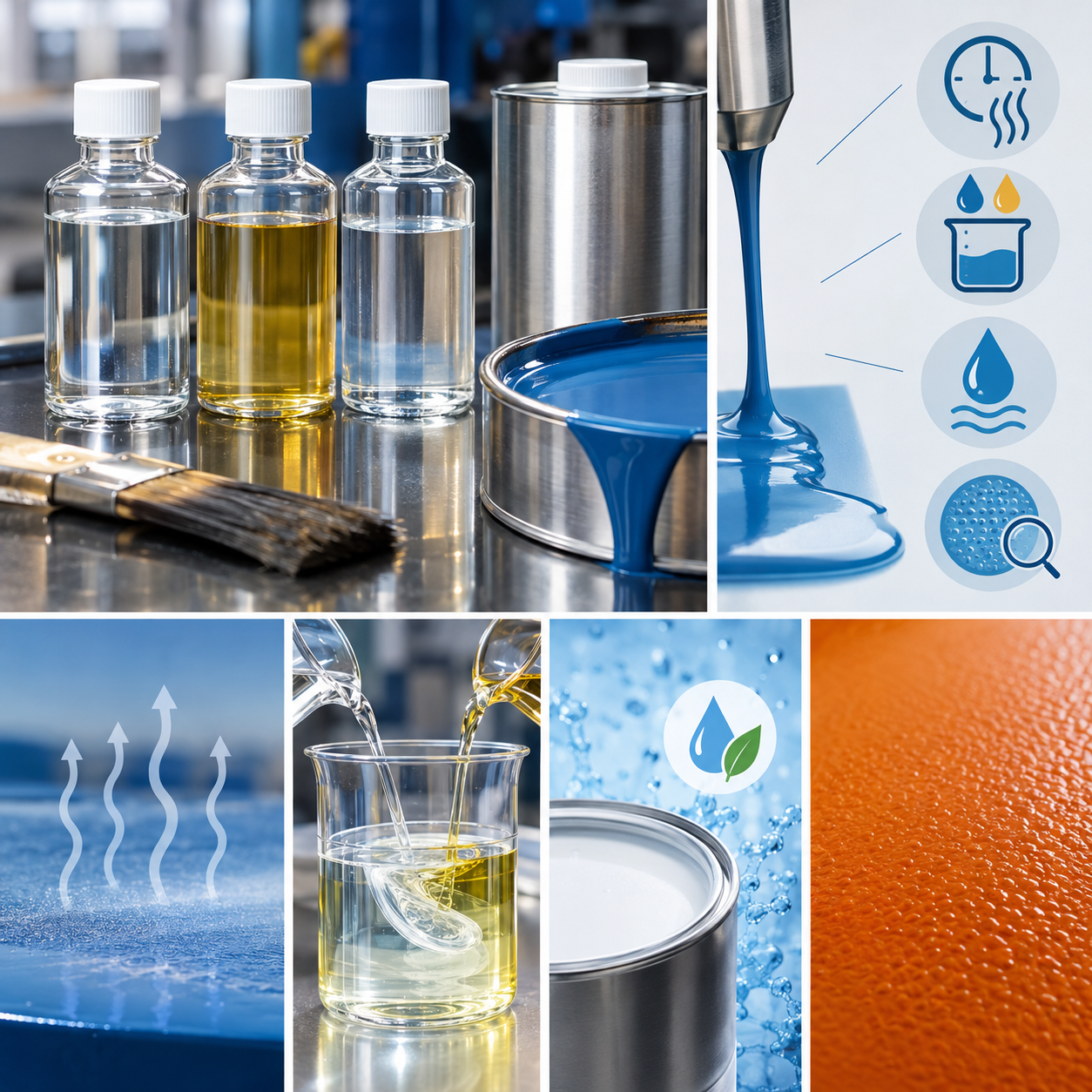
Solvent Isn't Just the Wet Stuff That Leaves
Solvent choice shapes how a coating flows, levels, and dries — it's not an afterthought. Evaporation rate, solvent blending, waterborne systems, and diagnosing orange peel.
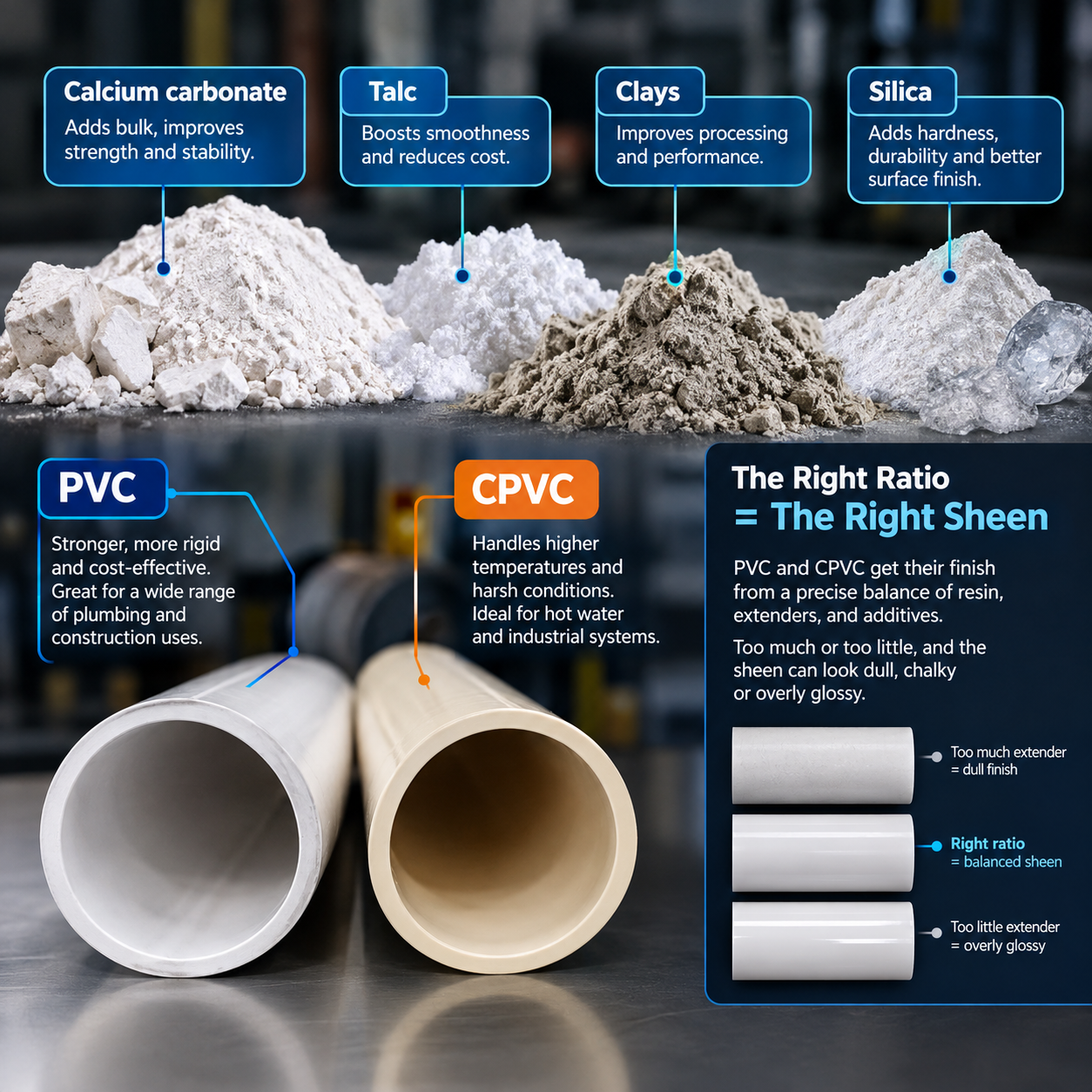
Extenders Aren't "Just Filler" — Here's What They Actually Do
Calcium carbonate, talc, clays, silica — extenders take the blame for cost-cutting when they're actually doing real work. What PVC and CPVC mean, and why sheen depends on getting the ratio right.
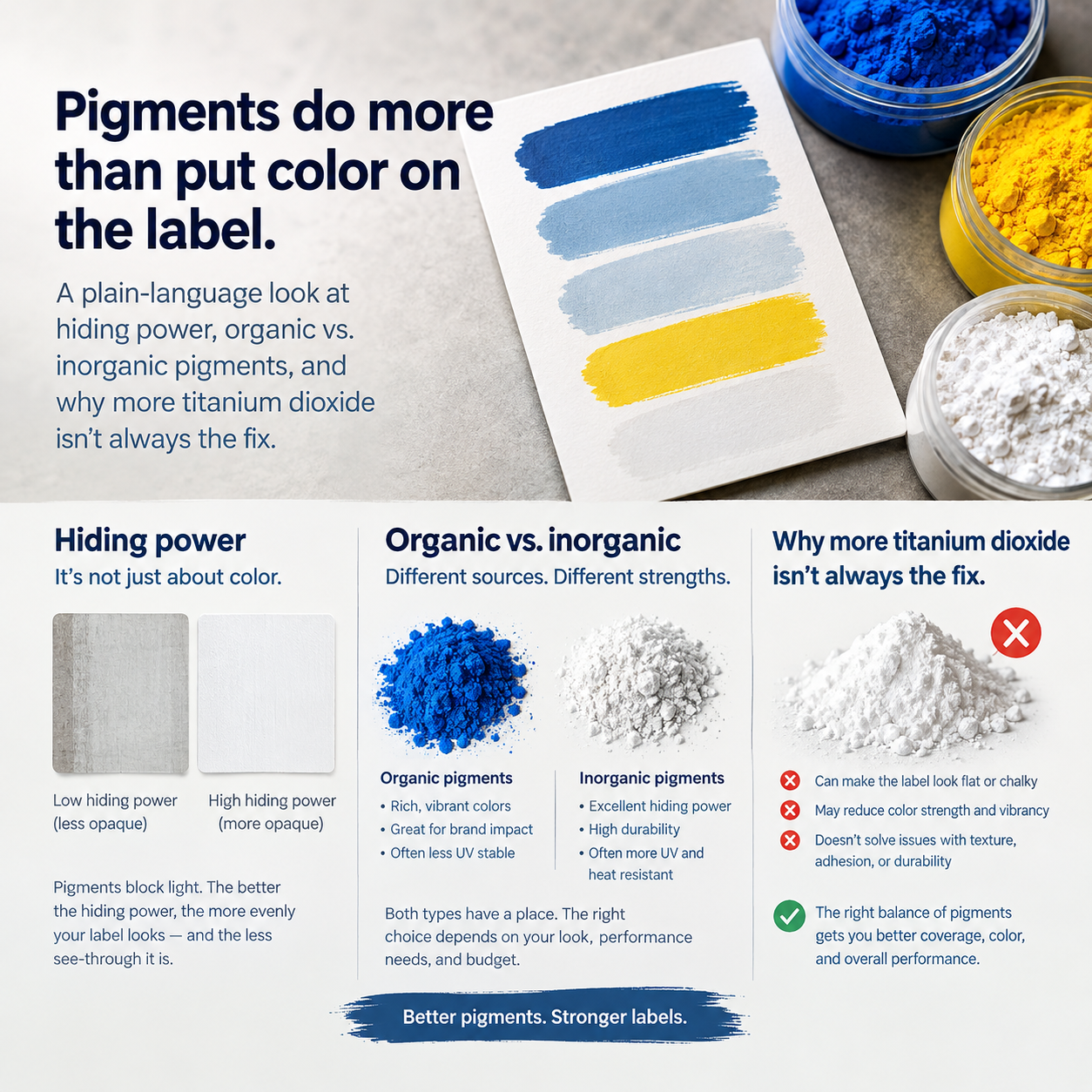
Color Isn't the Whole Job: What Pigments Actually Do
Pigments do more than put color on the label. A plain-language look at hiding power, organic vs. inorganic pigments, and why more titanium dioxide isn't always the fix.
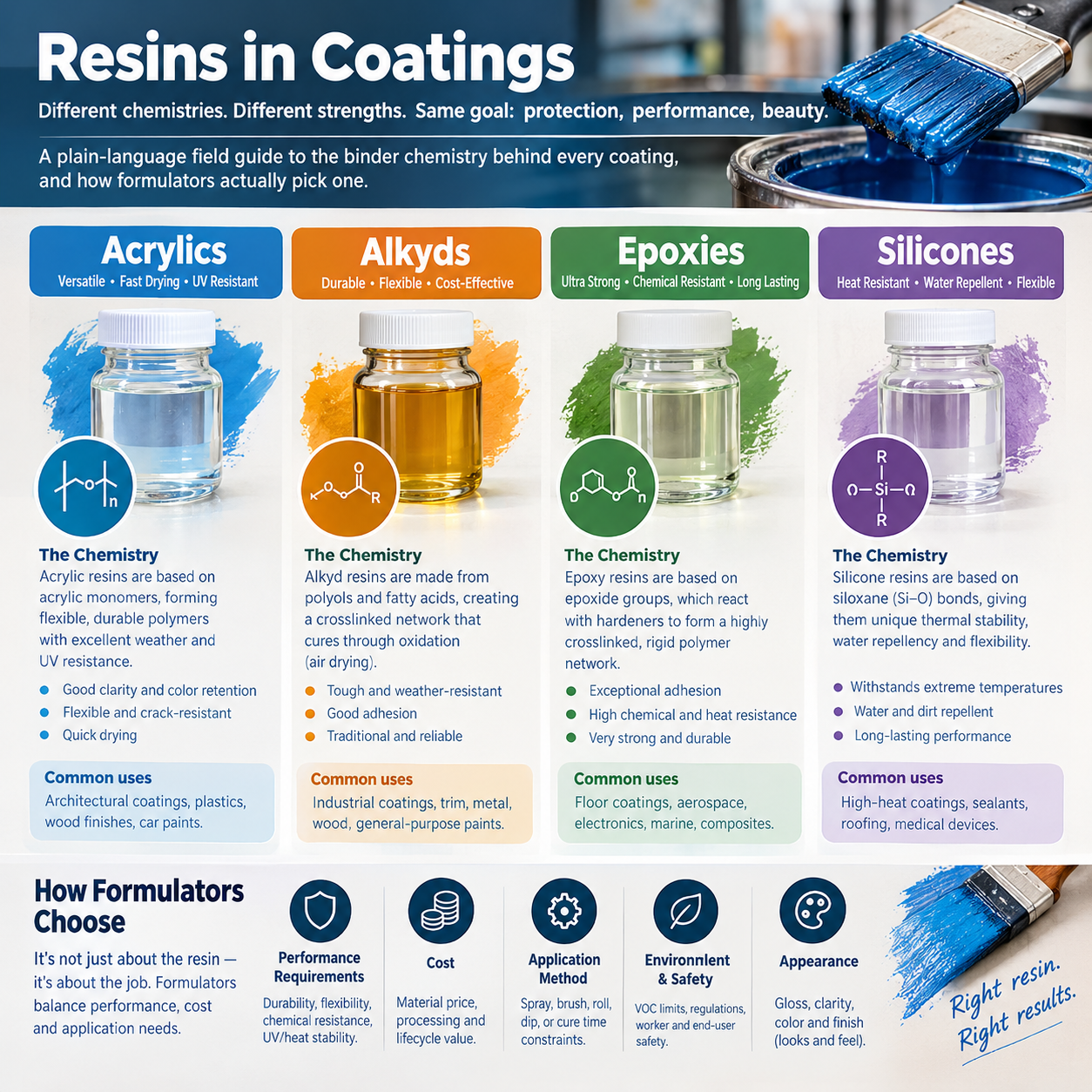
Meet the Resin Families: A Field Guide to Coatings Binders
Acrylics, alkyds, epoxies, silicones — every resin family has a reputation. A plain-language field guide to the binder chemistry behind every coating, and how formulators actually pick one.

The Five Ingredients on Every Coatings "Recipe"
Every coating formula, no matter how long the ingredient list, comes down to five jobs. Here's the framework that makes any formulation sheet readable — no chemistry degree required.

When the Government Changed Everything
Lead bans, VOC regulation, and the chromate phase-out reshaped the coatings industry more than any technology ever did. Here's what actually happened, and why the work isn't finished.

The Industry You Just Joined
The global coatings market is worth roughly $200 billion a year. Here's how it's structured today, why regional manufacturers still compete, and the three regulatory pressures building right now.

Things Nobody Tells You on the First Day
How to actually read a formula sheet, a technical data sheet, and a safety data sheet — the practical, un-textbooked skills every new coatings formulator needs on day one.

How to Think Like a Formulator
What actually separates a good formulator from someone just following instructions? A framework for mechanism-first thinking, diagnostic troubleshooting, and building real formulation judgment over time.

Every Coating You'll Work With Was Invented in 25 Years
If you work in this industry, there's a good chance everything you touch on a daily basis was developed between 1945 and 1970. That's not an exaggeration — it's the single most productive twenty-five years in coatings history. Latex went from a lab curiosity to the dominant architectural coating. Epoxy arrived. Polyurethane got commercialized. Powder coatings showed up.

The Chemistry That Built Modern Coatings
Henry Ford didn't paint the Model T black because he liked black. The real story explains how nitrocellulose lacquer, alkyd resin, and titanium dioxide reshaped the coatings industry.

Drying vs. Curing: The Most Important Distinction in Coatings Chemistry
A latex wall paint dries. An epoxy floor coating cures. They are not the same process — and knowing the difference tells you almost everything about how a coating will perform.

Where Paint Came From (The Short Version)
From cave paintings to Sherwin-Williams: a fast tour of coatings history, and why understanding where the industry came from explains almost everything about how it works today.

Every Coating Ever Made Comes Down to Four Ingredients
Every paint or coating — from a 40,000-year-old cave painting to a modern epoxy floor system — is built from the same four components. Here's the framework that makes any formula sheet readable